Ever clicked “buy” on a pair of shoes that looked perfect, only to find they pinched your toes because sizing ran small? That happened to my friend last week. She skimmed the description, missed the note on narrow fits, and now deals with blisters and a return hassle.
Online shopping tempts with endless options, but product descriptions often hide traps. Shoppers lose money and time on mismatches, with 20.8% of US e-commerce buys returned last year. About 11% stem from items not matching the text, like wrong colors or shrunk fabrics. You can fix this. Master how to read product descriptions the right way, and you’ll dodge regrets.
This post covers why buyers get fooled, key details to scan, pro reading habits, seller tricks to spot, and 2026 trends. You’ll get steps to shop smarter and save cash.
Why Shoppers Often Get Fooled by Product Descriptions
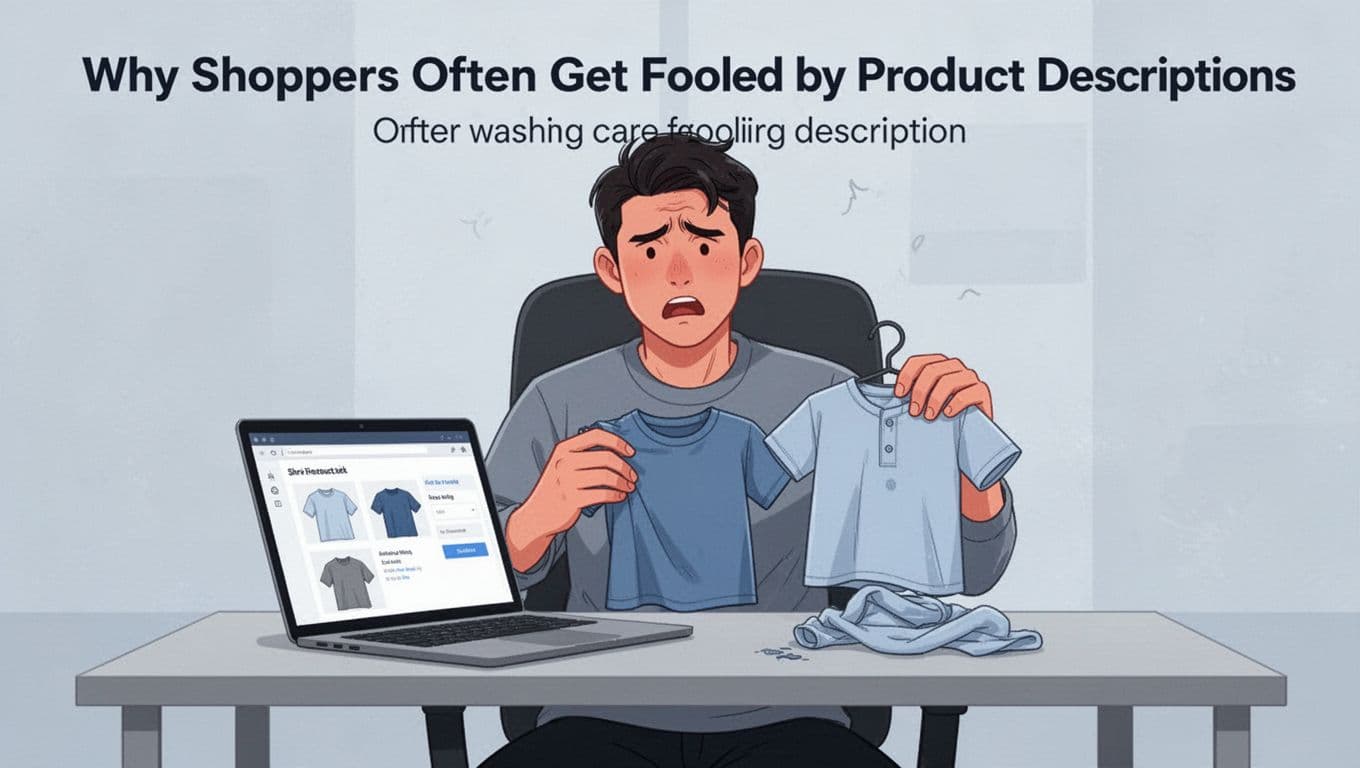
Buyers rush through text and pay later. Common slips lead to extra costs. For example, folks grab a “premium” blender without checking wattage, then it burns out fast.
Data shows the problem. In 2026, US online returns hit 20.8% overall. Apparel leads at 30-40%, often from poor fits tied to vague descriptions. Shoppers overlook details and bracket sizes, buying multiples to test. Returns cost stores $10 to $65 each, but you foot shipping or fees.
Sellers know this. They pack text with hype. Words like “amazing” dazzle without proof. You skip fine print on fees or care rules. Result? A shirt shrinks because wash instructions hid at the bottom.
Flip these errors. Pause before buying. Check real value over buzz. See eleven common mistakes most people make while shopping online for more pitfalls.
Overlooking Features Versus Real Benefits
Features list facts. “100% cotton” tells material. Benefits show gains. That cotton “wicks sweat to keep you dry on hot days.”
Sellers dump features. You get dazzled by specs but miss use. Always ask, “So what? How does this solve my problem?” A phone’s 128GB storage means room for photos without deletes.
Focus benefits first. They match your needs. Features support claims. Ignore fluff; seek proof like “tested for 500 washes.”
Missing the Fine Print on Shipping and Returns
Policies hide near buttons. Scan for “free returns in 30 days” but watch restocking fees. Shipping times vary; “2-3 days” might mean weeks in rural spots.
Check warranties too. Electronics need coverage details. One site lists “lifetime guarantee,” but fine print excludes normal wear. Returns data warns: 44% fail from fit issues linked to unclear policies.
Read policy links. Note costs upfront. This saves headaches.
Key Details to Scan in Every Product Description
Start with basics. Hunt exact specs over vague praise. “High quality” means nothing. Demand “hand-stitched leather from Italy.”
Match your needs. Search text for “hypoallergenic” in jewelry or “BPA-free” in bottles. Dimensions matter; a “compact” blender might eat counter space.
Break it down. Lists help spot must-haves fast.
Dig Into Specs and Materials First
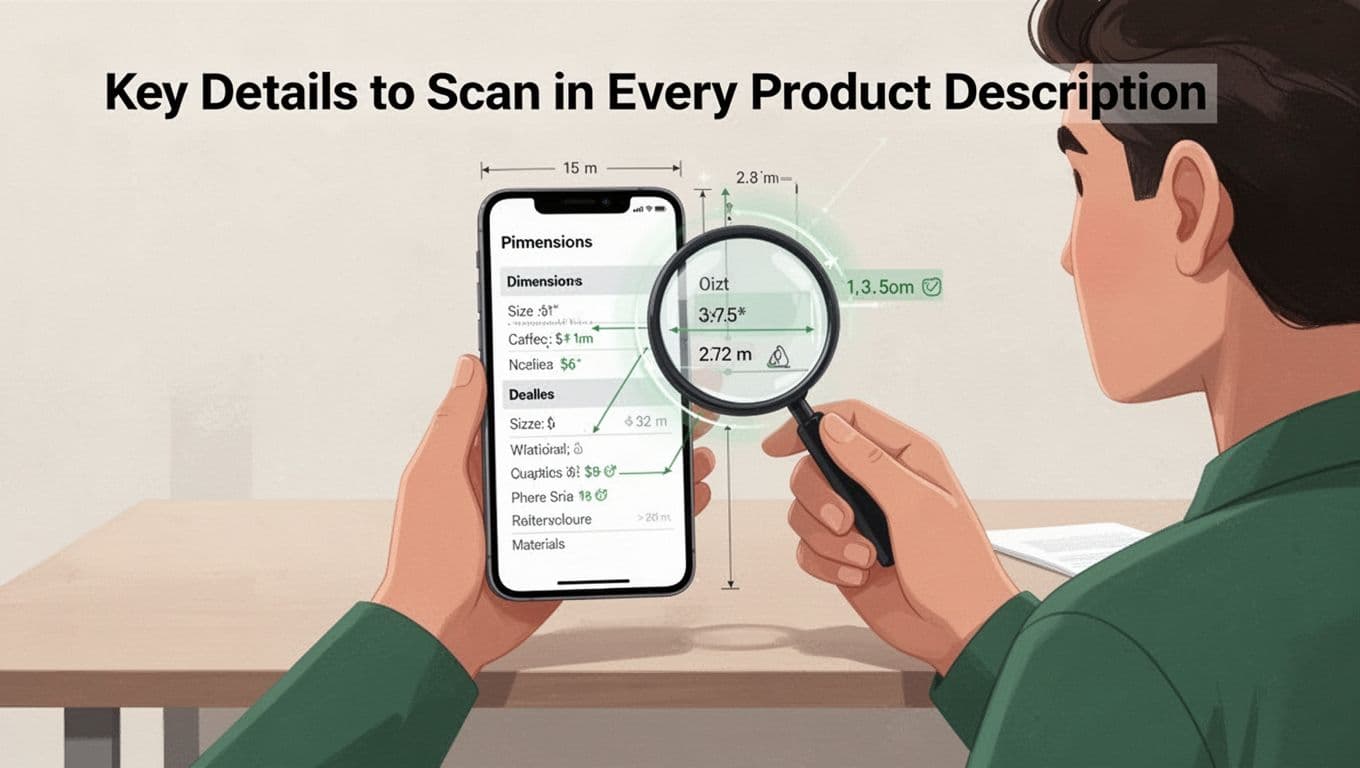
Prioritize numbers. Length, width, height in inches. Weight affects shipping and use. A “lightweight” backpack at 4 pounds surprises hikers.
Materials reveal truth. “Synthetic leather” differs from real hide. Care tags prevent shrinks; “machine wash cold” beats dry clean only.
Avoid fluff. Proof wins: certifications like OEKO-TEX for safe fabrics.
Verify with Photos, Videos, and Reviews
Photos lie in bad light. Seek multiple angles, zooms, and user shots. Videos show motion, like zippers gliding.
Reviews flag issues. Sort by “size” or “color.” One-star rants on fit guide you. “Runs large” helps pick right.
Cross-check. If text claims “wrinkle-free,” reviews confirm or bust it.
Smart Habits to Read Product Descriptions Like a Pro
Pros don’t speed read. They skim smart, then dig. This habit cuts returns and boosts smart buys.
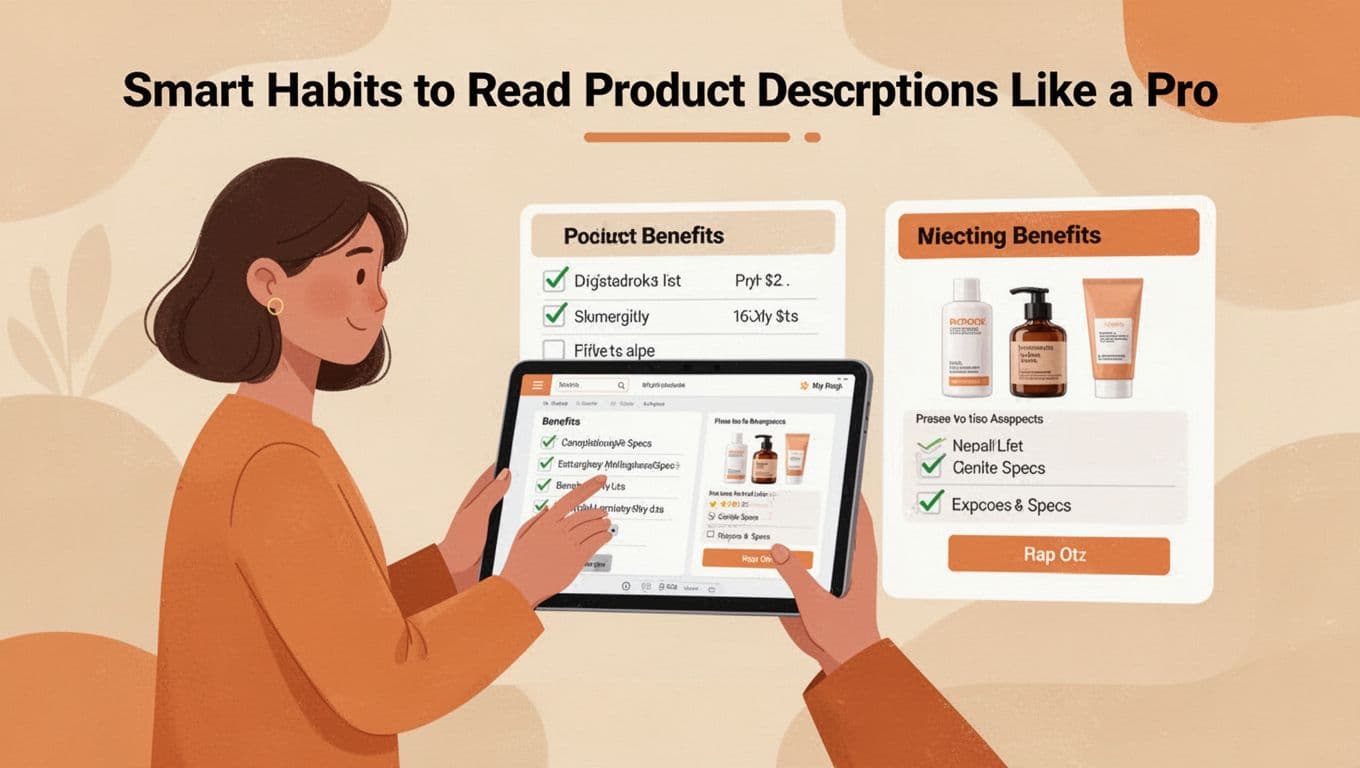
First, scan bullets and bold parts. They highlight key wins. Then read full text. Compare three similar items side-by-side.
Skim Smart, Then Dive Deeper
Eye bold headings first. They flag benefits. Skip long intros; hit specs next.
Read aloud. Hype sounds fake that way. “Revolutionary design” often flops.
Check mobile view. Text shrinks; clarity drops. Use questions: Does this fit my life?
Spot and Sidestep Sneaky Seller Tricks
Sellers push urgency. “Only 2 left” rushes you. Stock checks elsewhere reveal lies.
Generic fluff bores. AI text repeats “premium quality” without details. Demand specifics.
Feature dumps overwhelm. No benefits? Pass. Buried sizes trick; charts clarify.
Counter easy. See common product description mistakes and how to fix them. Insist on proof. Read for human voice; bland copy hides.

Fresh Trends Shaping Product Descriptions in 2026
AI drafts text now, but humans polish for trust. Pages personalize; your past buys tweak wording.
Sensory words pull you in. “Silky smooth feel” paints pictures. Scannable stories use headers like “Perfect for Busy Moms.”
SEO adds schema for rich results. Short for basics, detailed for pricier goods. Visual search matches photo uploads.
Shoppers win. Spot AI boosts like chat answers. Demand real details amid hype. Check 2026 playbook for scaling e-commerce with AI descriptions. Stay ahead; 51% buy from clear info.
Returns data pushes change. With 11% from mismatches, honest text cuts waste.
Shop Smarter with These Steps
You now know pitfalls, details, habits, tricks, and trends. Check specs and benefits first. Skim pro-style and dodge hype.
Apply today. Next buy, scan fine print and compare. You’ll cut returns and love purchases more.
What trick fooled you last? Share below. Start reading product descriptions the right way now.