
You spot a giant SALE sign in a store window or a flashing “Limited Offer Ends Soon” banner online. Your pulse quickens at the promise of big savings. But then doubt creeps in. Is this deal legit, or just hype to grab your cash?
Stores and websites toss these terms around freely. They spark excitement, yet many shoppers end up paying close to full price. The Federal Trade Commission (FTC) demands truthful ads, but it offers no strict definition for “sale” or “limited offer.” Instead, rules focus on avoiding deception. This post breaks down what these phrases truly signal. You’ll learn to spot real discounts from tricks, back it with FTC guidelines, and shop with confidence.
Let’s start by unpacking “sale” labels and why they often mislead.
Why ‘Sale’ Labels Can Be Misleading
The FTC lacks a precise rule for “sale.” However, Section 5 of the FTC Act requires ads to stay truthful. They can’t fool a reasonable buyer. A genuine sale drops the price from a recent, common level. It holds for a fair period, say weeks, not forever.
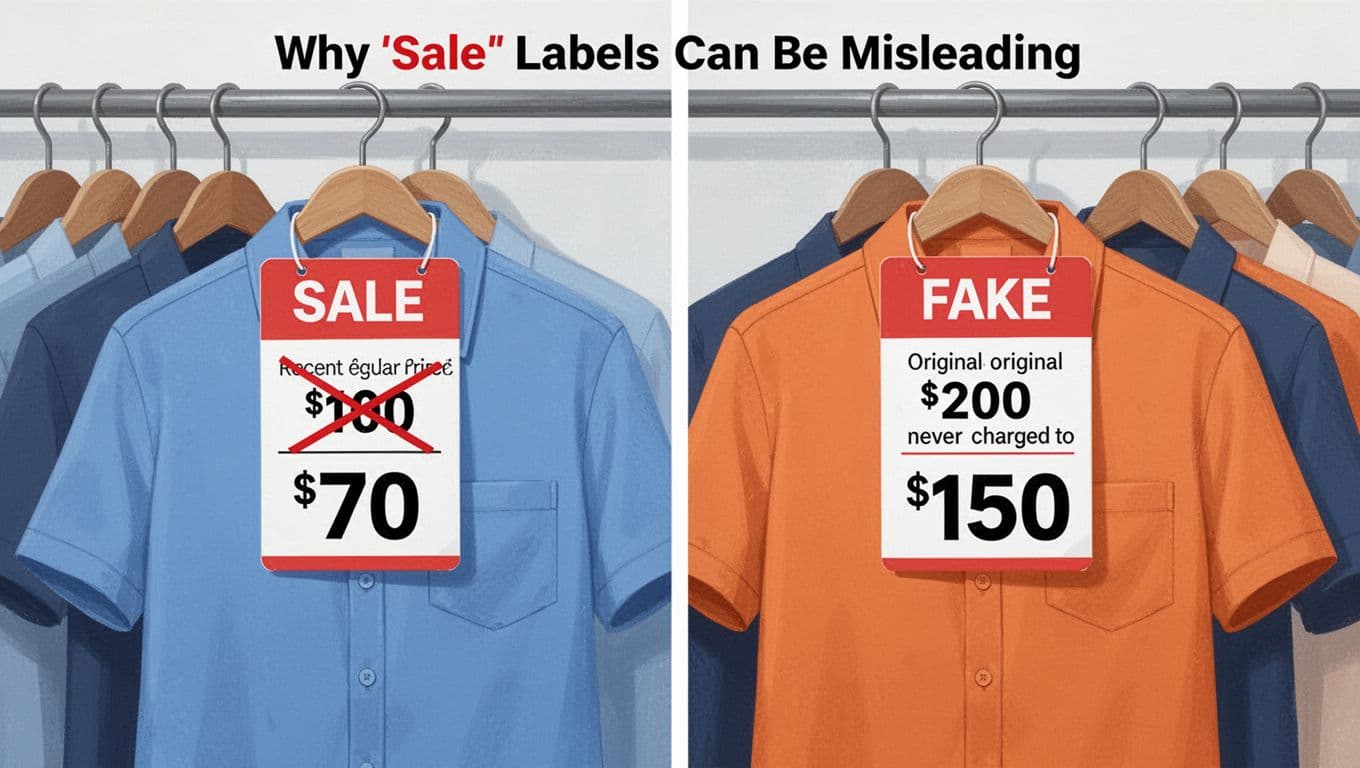
Fake sales inflate the “original” price first. Companies rarely charge that high mark, if ever. Or they jack up prices right before slashing them. Some keep items “on sale” year-round, calling it everyday low pricing. This erases real value.
Consider clothing racks. A shirt lists $200 crossed to $150. But check records; it sat at $150 for months. No savings there. The FTC expects proof of the usual price through sales data or receipts.
Here’s a quick comparison to clarify:
| Type | Description | Legal Status |
|---|---|---|
| Genuine Sale | Drop from recent regular price, like $100 to $70 after steady $100 sales. Lasts limited time. | Allowed if truthful. |
| Fake Sale | Inflated “original” never charged, or perpetual discount. Example: $200 tag added yesterday. | Deceptive under FTC Section 5. |
This table draws from FTC guides on deceptive pricing. Real savings beat the price over the past few months. Always verify.
Signs of a Genuine Sale
Look for discounts from a verifiable recent price. Stores keep records to back it up. The deal shouldn’t repeat constantly. It ties to clear usual pricing.
For example, a gadget sells at $100 for months, then drops to $80. That’s solid. Check online histories or ask staff for past prices. FTC tips stress this proof. You’ll confirm value before checkout.
Common Tricks with Fake Discounts
Watch for asterisks on “original” prices. They hide fine print like “MSRP” or “rarely charged.” Sales that never end signal trouble. Compare to sites like Amazon; no drop means no deal.
Companies pump prices pre-sale too. FTC calls this out in enforcement. In March 2026, it warned 97 auto groups for deceptive pricing. Spot these in apps or aisles. Act on facts, not flash.
Does ‘Limited Offer’ Really End Soon?
No FTC rule names “limited time offer” exactly. But claims must match reality. If it says “ends Friday,” it should. Endless repeats deceive.
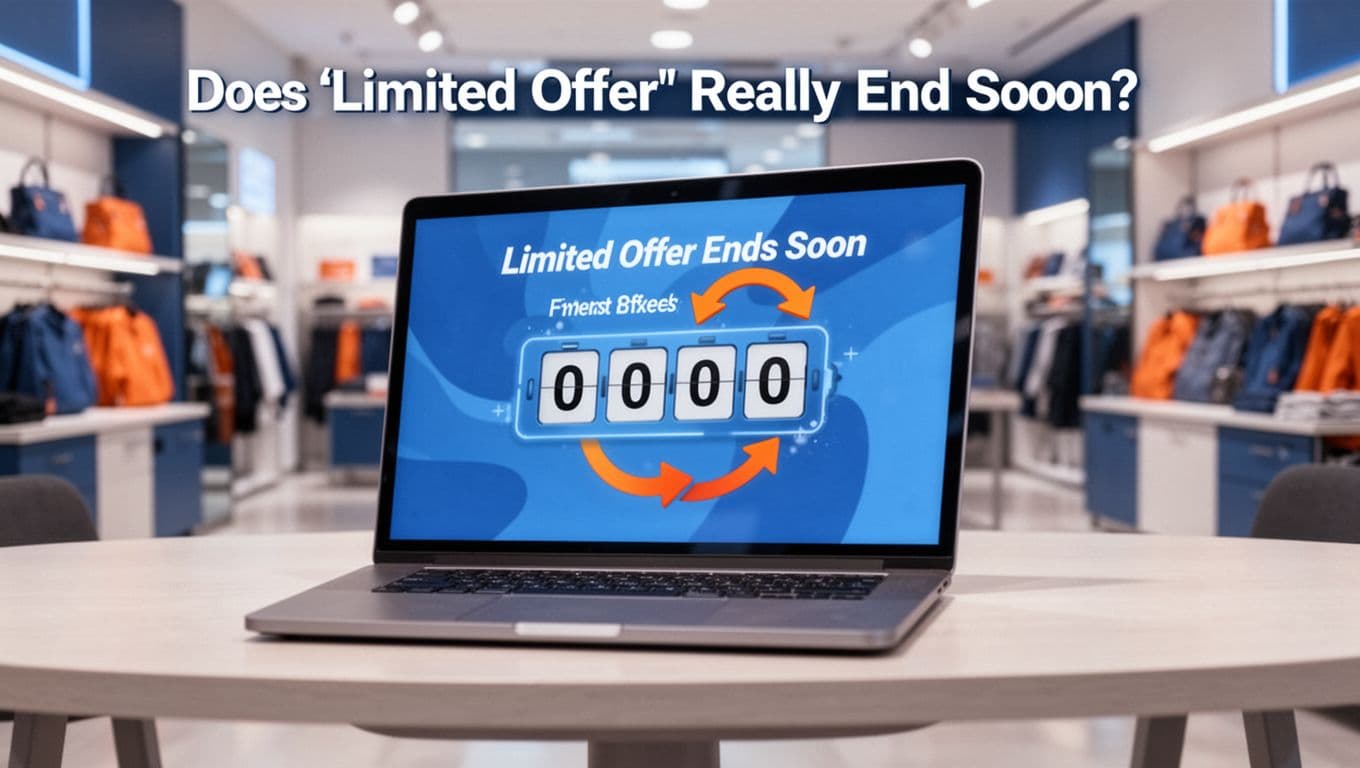
Genuine ones set real end dates with proof. They wrap up as promised. Misleading versions loop urgency. Timers reset silently. Or stock lasts forever under “while supplies last.”
Flash sales often flash on repeat. Pair them with auto-renewals, and fees hide. This pressures quick buys. You’ll miss traps by pausing.
What Makes a Time Limit Legit
Post a firm end date and honor it. Don’t recycle weekly. FTC demands records. A holiday deal from Dec 1 to 25 works. It ends clean.
Sneaky Ways Companies Fake Urgency
Countdowns that loop back fool many. “Supplies last” with bottomless stock does too. They mix with fake sales often. New fee rules hit tickets and lodging in 2025. Test by waiting a day. If it lingers, skip.
FTC Rules and What Happens to Rule Breakers
Section 5 of the FTC Act bans deceptive acts broadly. No 2026 updates target sales directly. Truthfulness rules all. Related laws cover online traps via ROSCA and hidden fees.
Breakers face fines, refunds, or ad bans. Courts enforce. In 2026, FTC sent warnings on pricing tricks. No CARS rule yet; courts blocked it.
Core Advertising Laws Explained Simply
Make price claims honest. Avoid fake comparisons. Set clear time limits. Comments on negative options continue into 2026. These protect from renewals.
Examples of FTC Taking Action
Auto dealers got letters in March 2026 for hidden fees and fake discounts. Past cases forced refunds. Patterns show fines for persistent fakers. Buyers win back cash.
Smart Tips to Avoid Deceptive Deals
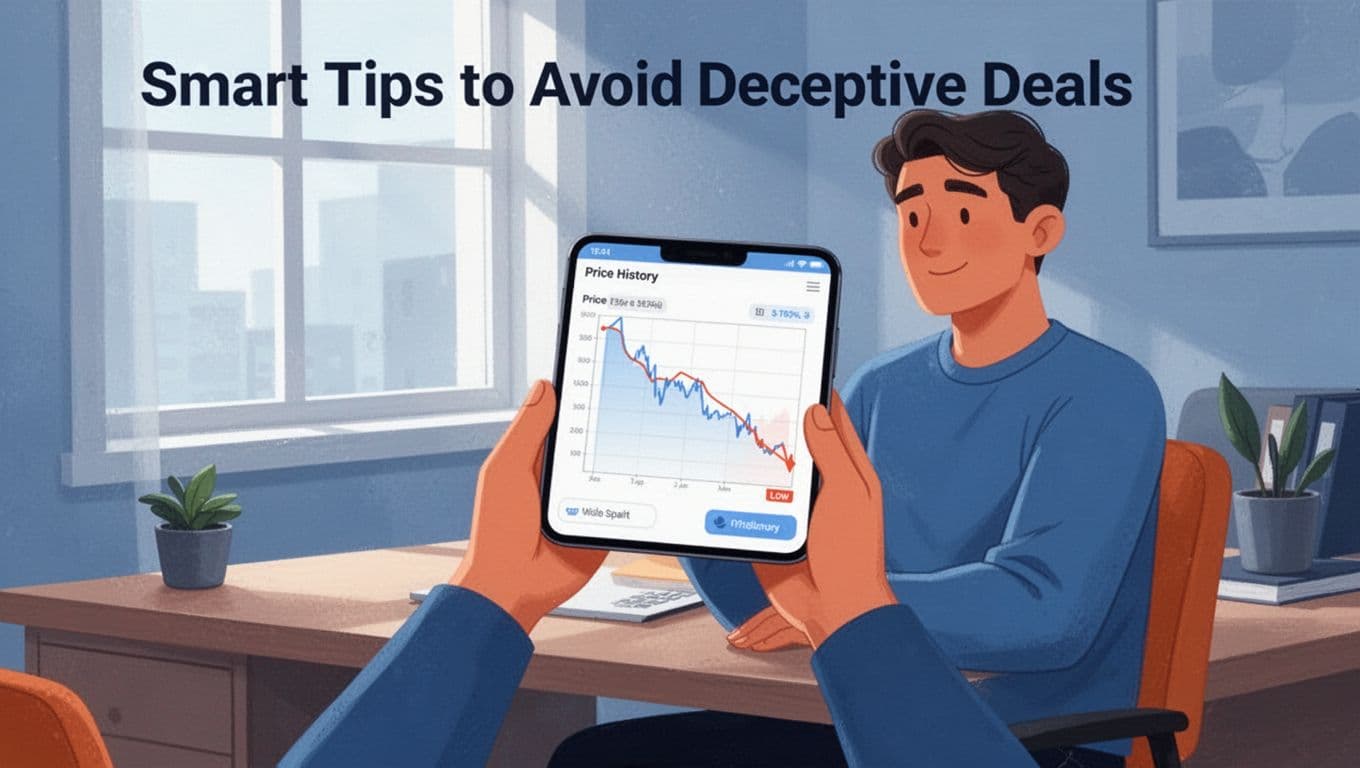
Arm yourself with checks. First, track price history. Tools help spot drops.
- Use CamelCamelCamel for Amazon charts. See months of data.
- Screenshot claims at purchase. Proof fights disputes.
- Wait out timers on limited offers. Real ones vanish.
- Read fine print for fees or conditions.
- Compare across sites or stores.
- Ask for recent price proof in person.
- Ignore endless sales; hunt true lows.
These steps save money. Practice them next shop.
Sales and limited offers promise value under FTC truth rules. But fakes lurk, from inflated tags to looping timers. Spot genuine ones with price checks and pauses.
You hold the power now. Use these tips to snag real deals. Share your close calls in comments. What’s your best save story? Bookmark this for Black Friday. Shop smart; savings await.