
Americans drop about $3,768 a year on impulse buys. That’s $314 each month. If you invested that cash instead, it could grow to over $50,000 in 10 years.
Nearly 78% of us snag unplanned items every month. Online, impulse sales hit 40% of e-commerce, with mobile driving 60% of those. Over half of millennials regret these splurges, and one in four items heads back as returns. Inflation adds pressure, so 60% now tap AI tools to check value before buying.
You can flip this script. Ask smart questions before buying anything to spot needs from wants. These four categories cover need, budget, value, and future fit. They help you save cash and skip remorse.
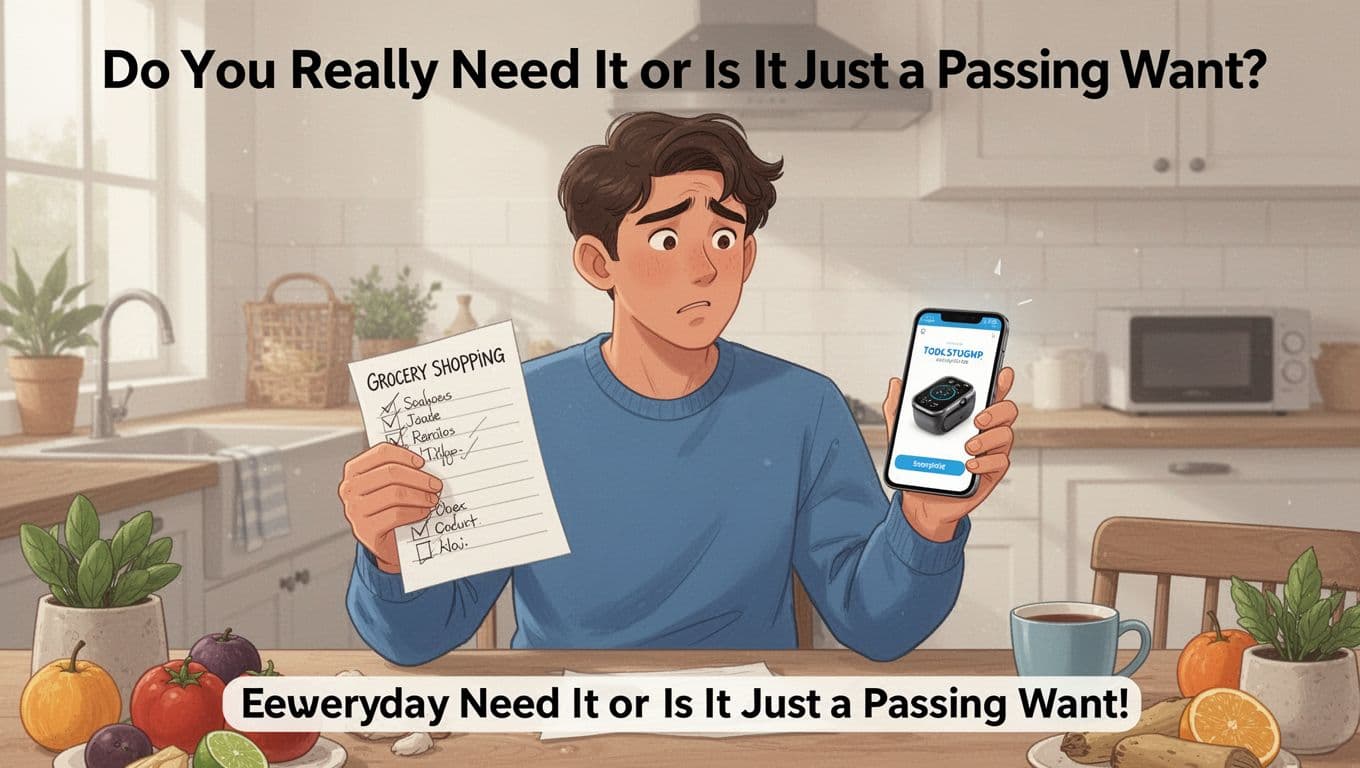
Do You Really Need It or Is It Just a Passing Want?
Impulse buys kick off when wants disguise as needs. You spot a shiny gadget online. It feels essential in the moment. But does it solve a real problem?
Start here: Do I need this, or do I just want it right now? Picture your day without it. Will life grind to a halt? Most times, no. People average 11.3 impulse buys monthly. Gen Z loses $2,640 yearly to social media ads alone.
Emails trigger 44% of splurges. Sales hook 38%. Social ads snag 30%. Stick to a shopping list. At groceries, lists cut 50% of impulse grabs. One friend bought noise-canceling headphones on a whim. They sat unused for a year.
For deeper stats on these habits, check impulse buying statistics from Gitnux.
Am I Swayed by Ads, Stress, or a Hot Sale?
Emotions fuel bad buys. Ask yourself: Am I grabbing this from stress, ads, or true need? Late-night scrolls tempt 71% of millennials in bed. Notifications ping nonstop.
Women average $2,300 yearly on impulses. Men hit $1,200, often on electronics. Unsubscribe from promo emails. Mute social ads. Pause and breathe. That “limited time” deal waits for no one, but your regret might.
Next time an ad pops, close the tab. Real needs stick around.
How Often Will This Get Used in Real Life?
Utility matters most. Will I use this often? Or will it collect dust? Gym clothes sound great. Reality hits different. One in four impulse items returns because they flop in daily life.
Visualize your routine. Does this fit seamlessly? A fancy blender joins the counter crew weekly. Or it hides in a cabinet. Test the idea mentally first. Frequent use justifies the spend.
Can Your Budget Handle This Buy Without the Stress?
Money smarts start with reality checks. Can I afford this without debt or skimping on basics? Unplanned buys fuel 15% of credit card debt. Older folks spend least at $45 monthly. They know peace beats instant thrills.
Set a fun-money bucket. Use cash only for extras. Apps track spends easily. In 2026, economic wobbles push caution. Skip dinner out for shoes? Not worth the pinch later.
That stress-free feeling lasts longer than the high.
Does It Fit My Monthly Spending Plan?
Budgets keep you honest. Does this buy squeeze essentials? Try the 50/30/20 rule. Half for needs, 30% wants, 20% savings or debt.
Essentials cover rent, food, bills. Wants get the scraps. If shoes eat your fun fund, wait. Self-check first. No app needed. Just honest math.
Track one week. Surprises drop fast.
Is This the Best Deal or Just a Shiny Trap?
Value hunters win big. Is this cheaper elsewhere? What do reviews say? Free shipping sways 28%. Easy checkout boosts 23%. Don’t fall for it.
Compare sites. Hunt prices. In 2026, AI agents scan deals quick. That “sale” item often rebounds cheaper next week. FOMO from timers tricks you.
Dig deeper. Real value shines through.
What Do Real Users and Reviews Reveal?
Reviews spill truth. Check multiple spots. Fake ones lurk. Cross-reference Amazon, Reddit, expert sites. Avoid the 52% regret trap.
One buyer loved a blender’s pics. Reviews flagged noise issues. She skipped it. Smart move. Users reveal flaws sellers hide. Spend 10 minutes. Save hundreds.
For more on smart checks, see these pre-purchase questions.
Will This Purchase Help Your Future or Hold You Back?
Think ahead. Does this align with goals like saving? What if I wait 24-48 hours? Pauses kill impulses. Turn off one-click buys. They cut splurges 21%.
Invest that $314 monthly. Build real wealth. Trends fade. Value lasts. Now 60% pick smarts over hype.
Your future self cheers the wait.
What Changes If I Sleep on It Overnight?
The pause rule works wonders. Sleep on non-essentials. Impulses fade by morning. Why? Emotions cool. Logic steps in.
One guy eyed AirPods at midnight. Next day, his old pair worked fine. Saved $200. Try 24 hours minimum. 48 for big stuff. Desires shrink. Clarity grows.
Details on the 24-hour rule for finances show how it curbs habits.
These questions transform shopping. Separate need from want. Fit buys to budget. Hunt true value. Eye the long game.
Ditch $3,768 in yearly waste. Skip remorse. Try them on your next urge.
Which question saved you cash? Share below. Grab more tips by subscribing.
Smart buys feel awesome. Your wallet says thanks.
(Word count: 1,482)