
Ever bought something hyped as American-made, only to find out it’s shipped from overseas? That happened to thousands when an upscale cookware chain got slapped with a record $3.175 million FTC fine. They kept slapping “Made in USA” labels on China-made pots and pans, even after promising to stop back in 2020.
These lies hit your wallet hard. You pay extra for “American quality,” but get foreign knockoffs instead. Trust breaks down too, because now you wonder about every label. Meanwhile, online shopping explodes: Americans will drop $1.3 trillion on e-commerce in 2026, with over 270 million shoppers clicking “buy” from phones. Mobile sales alone make up nearly 60% of it all. Scammers love this boom; they hide fake claims in shiny ads and vague product pages.
You deserve better. That’s why this post shows you how to spot fake or exaggerated claims on products. You’ll get simple tricks to catch red flags, like bogus origin labels or miracle promises. Real examples break it down, from cookware scams to beauty hype.
Next, we’ll cover common warning signs first. Then, step-by-step verification tools you can use right now. Finally, protection tips keep your money safe long-term. Stick around; these moves save you cash and headaches.
Spot These Common Red Flags Before You Buy
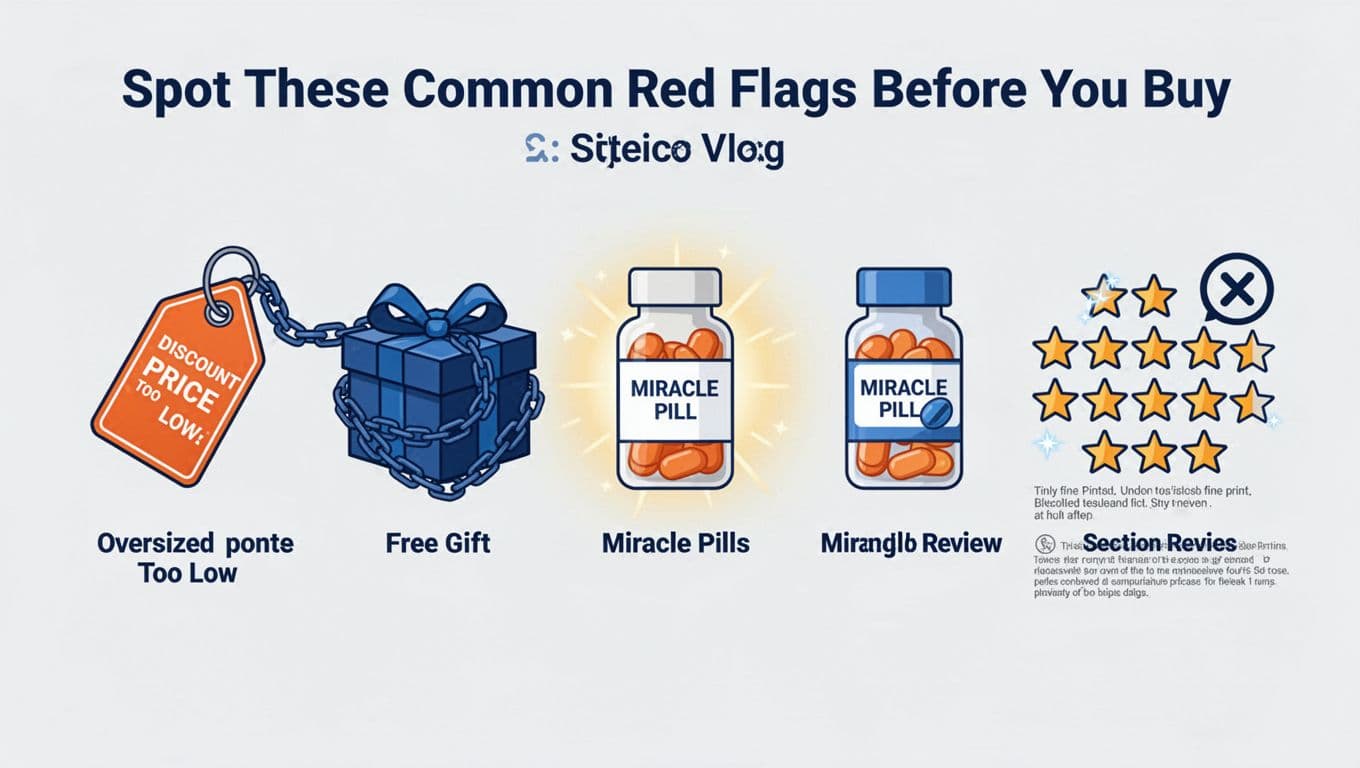
Scammers count on your excitement to snag a bargain. They flash bold claims that pull you in fast. However, these tricks often hide costs or lies. Spot them early, and you avoid regrets. The FTC warns about five big ones: deals too cheap to believe, freebies with traps, wild health promises, fake praise, and buried details. Ask yourself simple questions before you click buy. Does this match real prices? Where’s the proof?
Deals That Sound Too Good to Pass Up
Ads scream “luxury watch for $10” or “designer bag at 90% off.” These pull you in because who skips a steal? Yet, they often pack hidden fees or stock limits.
For example, cheap trials auto-renew at huge rates if you forget. You see $1 for the first month, then $99 hits your card. The FTC notes scammers pushed 40 such schemes in 2025 alone, costing folks billions. Check social media ads close; fakes mimic big brands with super-low prices.
Always read cancellation terms first. Can you opt out easily? If not, walk away. Real deals last without pressure.
Free Offers with Hidden Strings
“Free shipping” or “try risk-free” sounds perfect. But they ask for your credit card upfront. Surprise charges follow soon after.
Trials turn into subscriptions you can’t escape. Restocking fees bite if you return items. The FTC calls these negative options sneaky because they charge unless you act fast.
See an offer? Ask if it’s truly free. Hunt for extra costs in the details. Legit sellers make exits simple, so test that button before you commit.
Over-the-Top Health or Beauty Promises
Pills promise “lose 30 pounds overnight” or creams “erase wrinkles forever.” These grab hope, but lack real backup. Phrases like “clinically proven” appear without studies.
The FTC hit a telehealth firm, NextMed, in 2025 for fake weight-loss claims and hype around GLP-1 drugs. They used misleading ads and paid reviews too. Anti-aging scams follow suit.
Does the seller share study links? Real results take time, not magic. Skip if proof hides or sounds impossible.
Fake Reviews and Testimonials
All five-star raves with perfect stories? That screams fake. Paid actors or bots flood sites with glowy praise. Look for “results may vary” buried low.
The FTC’s 2024 rule bans these tricks, with warning letters sent in late 2025 to violators. Companies faced fines for gaming reviews during holiday rushes. Real feedback mixes gripes and wins.
Scan for patterns. Do critics exist? Check reviewer history too. Honest sites show the full picture.
Sneaky Fine Print and Mismatched Details
Big bold headlines shout benefits. Tiny text below shrinks them or adds catches. Photos show sleek gadgets; you get cheap plastic.
Vague “Made in USA” labels cover imports often. The FTC stresses mismatches like this during 2026 Consumer Protection Week. Fees hide, origins lie.
Zoom in always. Do images match descriptions? Read every line before purchase. Clear sellers match hype to reality.
Real Examples of Companies Caught Making False Claims
Real companies face huge fines for fake claims. They promise quality you pay extra for, but deliver cheap imports or empty hype. These cases prove the risks hit big players too. You could buy from them next and lose out. Let’s look at recent busts from 2024 and 2025. The FTC cracked down hard, so buyers got refunds in some spots.
Williams-Sonoma Upscale Cookware Fine
Williams-Sonoma ran an upscale cookware chain. They labeled pots and pans “Made in USA,” but China made them. This broke a 2020 FTC order after an earlier $1 million fine. In 2024, the FTC hit them with a record $3.175 million penalty. Six products still carried false labels.
Shoppers paid premium prices for American quality. Instead, they got foreign goods. Check the FTC press release on this case for full details. Big chains think rules skip them. They don’t.
Chaucer and Bates Clothing Refunds
Chaucer Accessories and Bates Accessories sold clothes with bogus “Made in USA” tags. Imports came from overseas, yet labels lied. The FTC stepped in during 2024. These brands sent more than $140,000 back to tricked buyers in November.
Customers chose these for patriotic support and better build. They overpaid without knowing. See how the FTC handled refunds in their official announcement. Small firms pay up too. Scams cross all sizes.
Ka’Chava Nutrition Shake Lawsuit
Ka’Chava sold “all-in-one” meal shakes as complete nutrition packs. They claimed full vitamins and minerals for any meal. A January 2026 class action lawsuit called that out. The shakes lack choline for brain health and vitamin K for blood clotting. Plus, 240 calories fall short for adults.
Buyers trusted these for quick, balanced eats. Reality fell flat on key nutrients. Read the lawsuit filing summary. Health hype draws suits fast because bodies need real fuel.
Kubota North America Parts Penalty
Kubota sold replacement parts for heavy equipment. They stamped them “Made in USA,” but factories abroad built most. The FTC nailed them in 2024 with a $2 million penalty. Farmers and workers bought in for domestic strength.
Overseas origins meant uneven quality at times. Penalties like this push honesty. Companies learn the hard way. You spot these flags and dodge the bill.
These busts cost millions in fines and refunds. Yet victims paid first for lies. Next time you shop, remember: even pros get caught. Check labels close. Your wallet stays safe.
Verify Product Claims with These Smart Checks
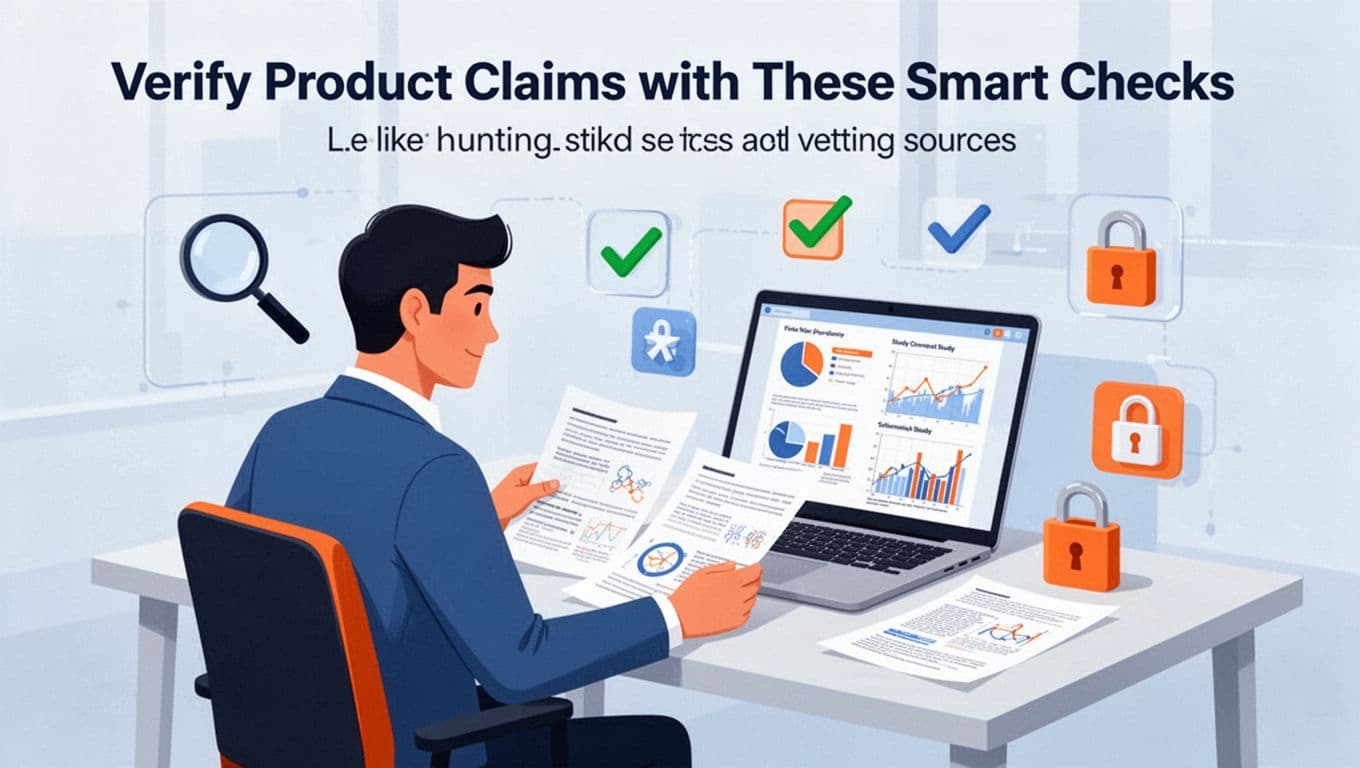
You’ve seen the fines and refunds from big companies caught lying. Now take control yourself. Smart checks turn you into a pro at spotting fake science behind product hype. Start by reading the claim word for word. Does it promise “clinically proven” results? Demand the proof. Hunt peer-reviewed studies on sites like PubMed. Look for randomized, double-blind trials with large samples, proper controls, and solid stats. Vague words like “may help” or old data from 10 years ago often signal tricks. Next, vet the experts and use trusted tools. These steps save you from wasting money on empty promises.
Hunt Down the Actual Studies
Sellers love summaries or cherry-picked quotes. Ignore those. Grab the full papers instead. Search the exact claim on PubMed or Google Scholar. Real studies list methods up front.
Check key details first. Did they use a control group? Random assignment stops bias. Double-blind setups hide treatments from everyone involved. Sample sizes under 50 often flop; aim for hundreds. Stats matter too. P-values below 0.05 show real effects, not luck.
For example, a supplement claims “boosts energy like caffeine.” Find the study link. Read the full text. If it lacks these basics, skip it. The FDA’s guide on evaluating health claim evidence explains what strong proof looks like. You spot weak ones fast this way.
Question the Experts and Sources
Experts sound smart, but check their background. Google their name plus “credentials” or “scandal.” Do they work for the seller? Ties create bias.
Look for red flags like paid endorsements or past fines. Real pros publish in top journals without company funding. Seek agreement from groups like FDA or NIH. No single study sways them; they want consensus.
In short, cross-check quotes. The NIH tool for science trustworthiness helps you judge sources quick. If the “expert” dodges details or pushes one product, doubt it. Honest ones share full data.
Use Trusted Sites and Tools
Skip random blogs. Head to proven spots like PubMed for studies or Google Scholar for citations. Snopes debunks viral fakes too.
Government sites shine brightest. FDA lists claims with “significant scientific agreement,” meaning experts agree on proof. Check their authorized health claims page. FTC updates warn about current scams.
Follow these steps:
- Paste the claim into PubMed.
- Filter for human trials post-2015.
- Scan abstracts for sample size and results.
- Visit FDA or NIH for official nods.
Tools like these cut through hype. For instance, Snopes busted fake food tests; apply that to supplements. Recent FTC rules stress solid studies for health ads. You verify claims like pros now and shop smarter.
Protect Yourself and What to Do Next
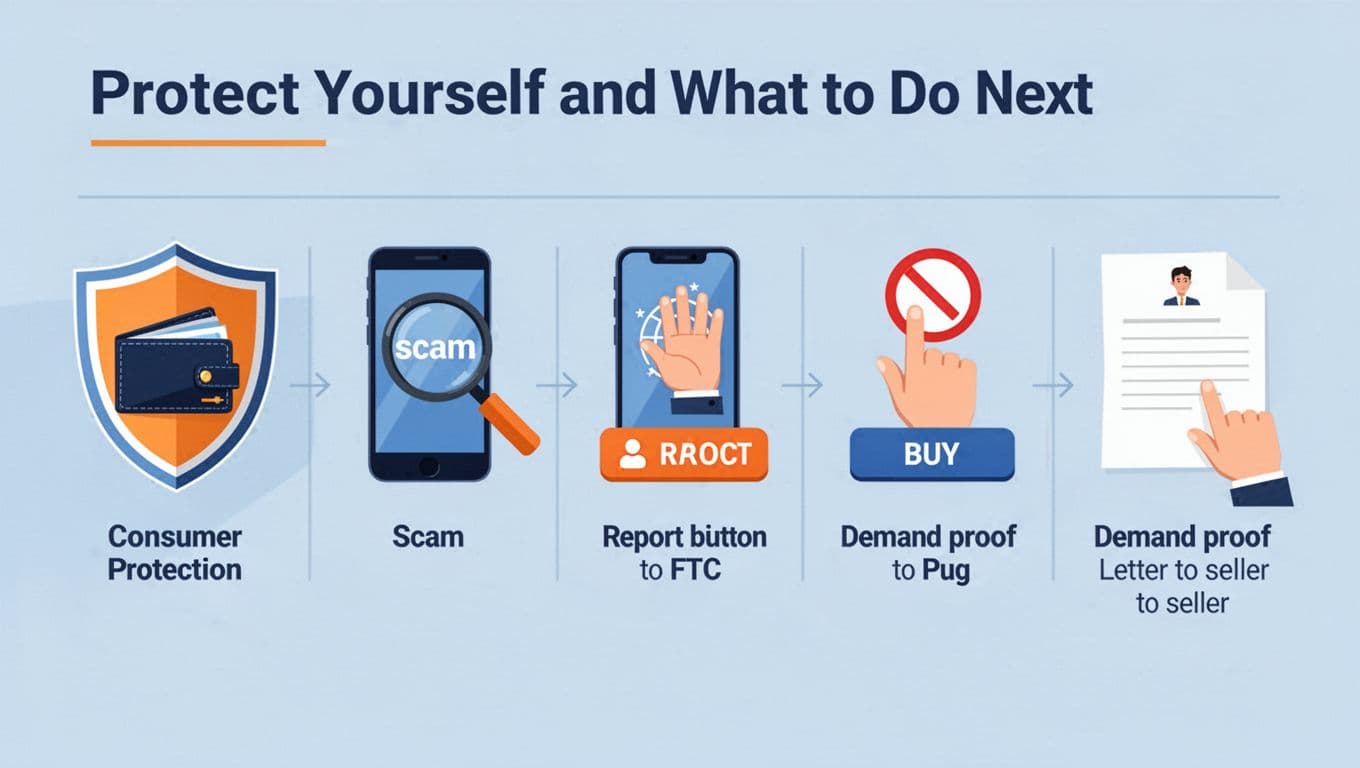
You’ve spotted the flags, checked the studies, and dodged the big fines from liars like Williams-Sonoma. Now act fast to shield your wallet. These steps stop scams before they hit and help shut them down for good. They save you time and cash, because one pause pays off big.
Pause and Search Smart
Hit pause before you buy. That shiny “90% off” deal tempts you, but wait 30 seconds. Type “product name + scam” into Google or your search bar right then.
Results pop up fast with complaints or busts. For example, quick searches exposed Ka’Chava’s nutrient gaps early. This habit blocks impulse buys and uncovers hidden fees. You avoid regrets, so your money stays yours.
Report to FTC or FDA Right Away
Spot a fake claim? Report it now. The FTC tracks these for big actions, like the refunds from Chaucer clothes. Head to ReportFraud.ftc.gov and file details in minutes.
Health hype goes to the FDA problem reporter. Your tip builds cases that fine scammers millions. Plus, President Trump’s March 2026 executive order ramps up FTC enforcement on false “Made in America” lies. See the White House order text for how it targets online fakes too. Reports like yours make it stick.
Demand Proof from the Seller
Email the seller directly. Ask for study links or origin docs. Say, “Show me the proof behind this claim.” Legit ones reply quick; dodgers ghost you.
This pressures them to prove up or back off. In addition, it creates a record if you report later. You gain clarity fast, without extra spends.
Build these as daily habits. Always read full terms, even on mobile. Check returns and origins last. Over time, you shop like a pro. Scammers lose, your bank wins.
Conclusion
You now know the red flags like impossible deals and fake reviews. Real cases from Williams-Sonoma to Ka’Chava show companies pay big for lies. Verification steps, such as PubMed checks and FTC tools, give you proof fast.
Consumers lost $15.9 billion to fraud in 2025 alone. That’s up 27% from last year. However, smart habits like pausing to search “scam” save you from that trap. In addition, reports help recover cash, as the FTC sent back $27.6 million recently.
Bookmark this post for your next shop. Share it with friends to spread the word. Spot a shady ad? Report it at ReportFraud.ftc.gov right away.
Drop a comment below: what’s the worst fake claim you dodged? Sign up for our newsletter too. With these tools, you’ll spot fakes and make better buys.